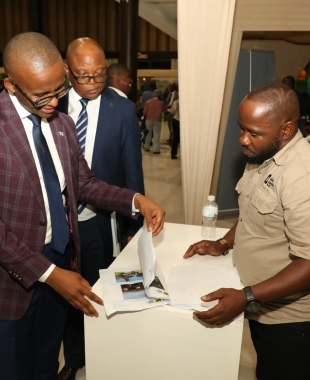
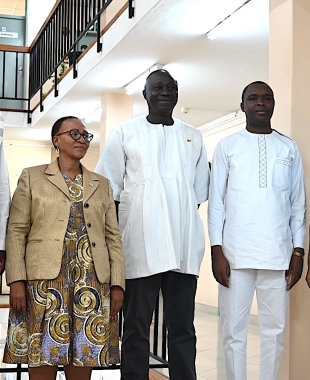
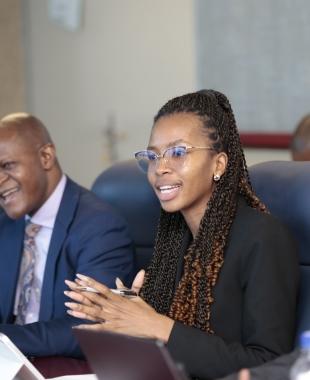
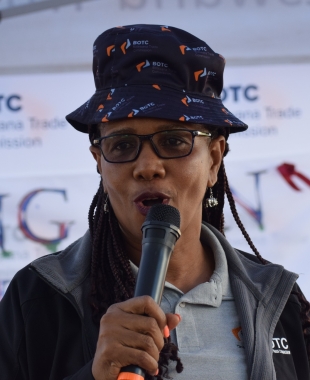
GABORONE – As conflict in eastern Democratic Republic of the Congo enters its fourth decade, Botswana has hosted a High-Level Harmonisation Meeting of the African Union Panel of Facilitators alongside a public lecture at the University of Botswana (UB), both aimed at fast-tracking peace in the Great Lakes region.
The three-day gathering brought together AU mediator Faure Gnassingbé (Togo) and former heads of state Olusegun Obasanjo (Nigeria), Mokgweetsi Masisi (Botswana), Sahle-Work Zewde (Ethiopia), Catherine Samba-Panza (CAR), and Domitien Ndayizeye (Burundi).
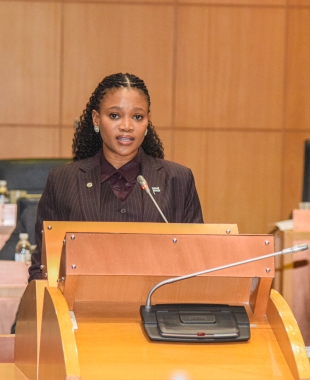
Opening the harmonisation meeting, International Relations Minister Dr Phenyo Butale reaffirmed Botswana’s backing for a unified AU-led process, stressing that the Washington Agreement and Doha Process should complement African mediation. Representing the AU mediator, Yackoley Kokou-Johnson warned the talks come at “a critical stage” as humanitarian conditions worsen, adding that the region expects tangible results.
SADC Executive Secretary Elias Magosi, in remarks read by Professor Kula Theletsane, urged Africa to honestly assess its peace architecture amid deteriorating security and a resurgence of Ebola. EAC Secretary General Veronica Nduva called for a shift “from concepts, instruments and strategies into achievable, implementable, measurable interventions on the ground.” Panel chairperson Obasanjo pressed delegates to deliver practical proposals, cautioning that “time will be going, people will be dying” if commitments are not translated into action.
At the UB public lecture, academics stressed that universities can reinforce peace by producing relevant knowledge and training mediators. Professor Thapelo Otlogetswe and Dr Kebapetse Lotshwao offered UB’s practical support via research centres, short courses, policy briefs, and academic exchanges with Great Lakes institutions.
Mediator Gnassingbé described the crisis as a human tragedy demanding African ownership, proposing a mediation model built on trust, flexible dialogue, and implementation of existing agreements. Panellists identified the conflict economy, weak state presence, competition over strategic minerals, and poor governance as core drivers. Sahle-Work Zewde and others insisted humanitarian action cannot await political settlement, and that inclusivity—embracing local communities, civil society, and regional actors—is non-negotiable.
Speakers rejected simplistic fixes, arguing sustainable peace requires simultaneous progress on social cohesion, justice, development, genuine political commitment, and stronger regional cooperation.