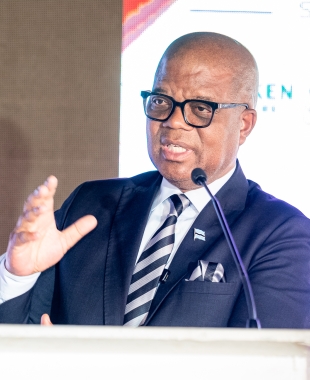
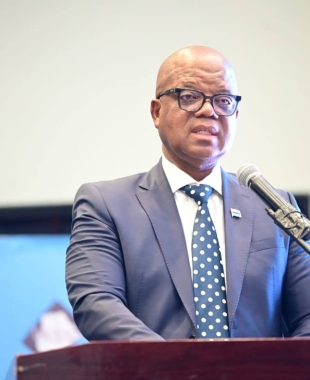
The Attorney General Dick Bayford, has called for a fundamental shift from managing litigation after governance failures towards preventing disputes before they arise, as part of efforts to strengthen legal governance across the public sector.
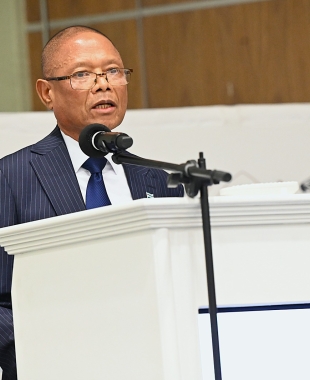
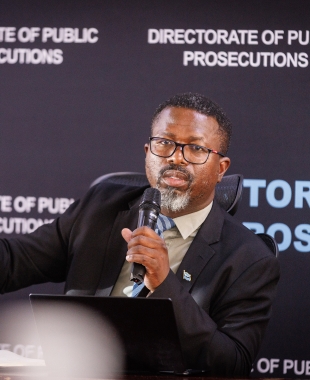
Speaking at a two-day workshop on the Public Service Act No. 5 of 2026 and conditions of service, organised by the Directorate of Public Service Management (DPSM) at Cresta Lodge, Gaborone, Bayford said the traditional reactive model of legal engagement is increasingly unsustainable.
“We must move away from managing litigation after governance failure towards preventing governance failure even before litigation arises,” he said. “The most effective Government lawyer is not the one who necessarily wins the most cases in court, but the one who finds solutions to prevent disputes from arising in the first place.”
The Attorney General revealed that in 2023 alone, the Attorney General’s Chambers recorded 5,221 cases across its three stations, with only 37 attorneys, which is an average caseload of approximately 141 matters per officer. He warned that litigation carries substantial costs, including legal fees, operational disruption, reputational harm and the diversion of limited public resources.
Bayford made a strong case for “preventative lawyering”, arguing that a single High Court matter avoided through timely legal intervention may save the State millions in settlements and project delays. He stressed that early legal engagement must occur during policy formulation, procurement decisions, contract drafting and disciplinary processes before vulnerabilities escalate.
He also identified recurring weaknesses within the Public Service, including outdated policies, inconsistent enforcement, poor documentation and inadequate record-keeping. “Proper documentation is not merely an administrative requirement; it is a critical legal safeguard,” he said.
The Attorney General noted that his Chambers has already begun practical measures, including seconding legal officers to Ministries and establishing dedicated desk officers for high-litigation departments.
“Strengthening legal governance in the public sector is not only a legal imperative, but also a governance imperative, a fiscal imperative and a developmental necessity,” said the Attorney General.
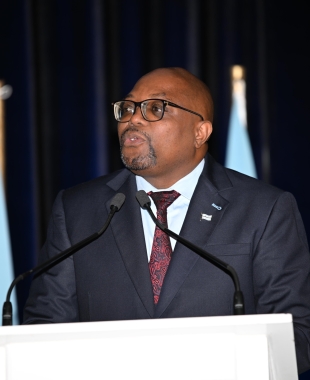
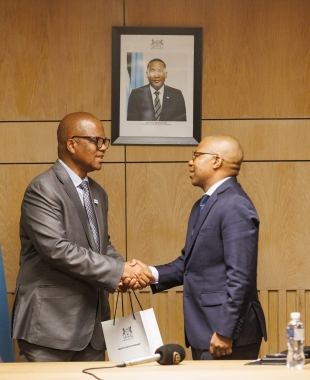
Officially closing the workshop, the Minister of Justice and Correctional Services, Nelson Ramaotwana, commended the Judiciary for its openness and professionalism, and thanked the Attorney General, the Ministry of Labour, Trade Unions and the DPSM for their roles in the legislative reforms. He urged all stakeholders to carry forward a spirit of cooperation and shared responsibility, ensuring that the law serves the people of Botswana fairly and with integrity.