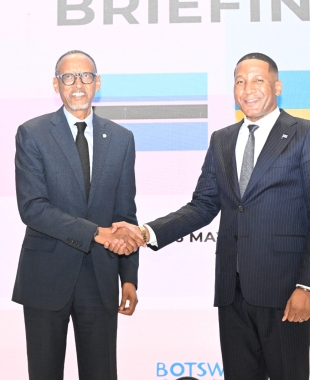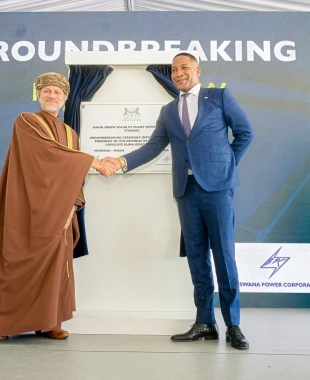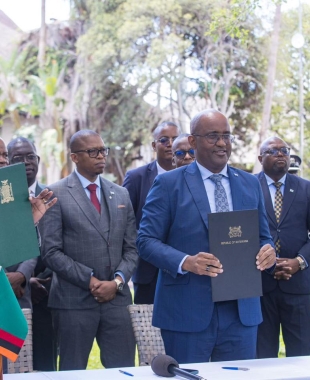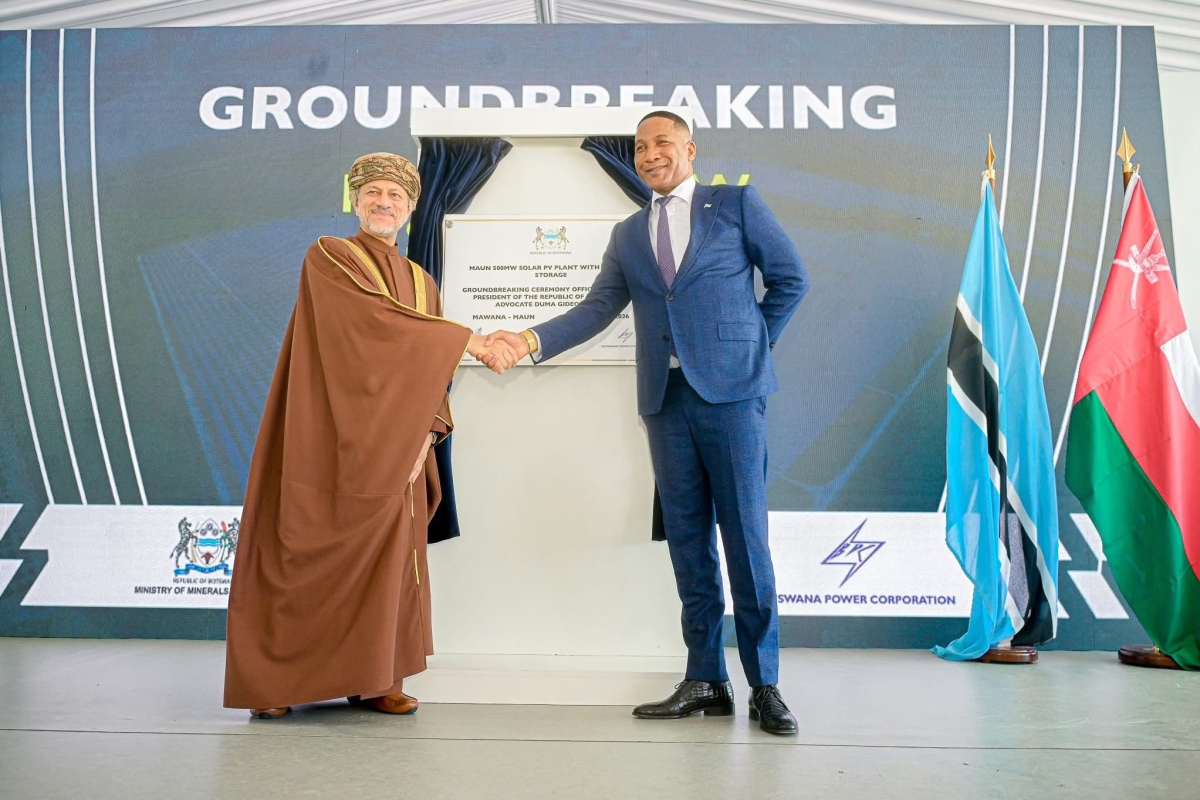
Botswana has today marked a historic milestone in its energy transformation journey with the groundbreaking ceremony and signing of the Power Purchase Agreement (PPA) for the 500MW Maun Solar Photovoltaic (PV) Plant and 500MWh Battery Energy Storage System (BESS), one of the most ambitious renewable energy initiatives in the country’s history.
Officiating at the ceremony in Maun, President Duma Boko stated that the project represents Botswana’s decisive shift from planning to execution, as the nation accelerates its transition toward a secure, sustainable, and affordable energy future.
The flagship development, implemented through a Government to Government partnership with the Sultanate of Oman and executed by Botswana Power Corporation in collaboration with Okavango Solar, will inject 500MW of clean and reliable energy into the national grid upon completion.
A key component of the project is the 500MWh Battery Energy Storage System (BESS), which will enable the storage of solar generated electricity during the day for deployment during peak demand periods in the evening and early morning. This will significantly enhance grid stability and overall energy security.
President Boko emphasised that Botswana is firmly on track to increase the share of renewable energy in its national generation mix to 50% by 2030, up from the current baseline of approximately 8%, in line with the revised and accelerated Integrated Resource Plan.
“This is not merely a project, it is a clear statement that Botswana is poised to become a regional energy hub,” the President remarked.
With over 3,200 hours of sunshine annually and among the highest solar irradiation levels globally, Botswana is uniquely positioned to lead in solar energy generation and regional power exports.
The Maun Solar Project builds on ongoing progress in Mmadinare and Jwaneng, where two 100MW utility scale solar projects are advancing, with Mmadinare already operational and Jwaneng nearing full commissioning.
According to David Kgoboko, the Maun plant will be developed under an Independent Power Producer (IPP) model and operated under a 30 year Power Purchase Agreement.
Beyond strengthening national energy security, the project is expected to:
- Reduce Botswana’s carbon footprint
- Lower reliance on costly electricity imports
- Stimulate investment inflows
- Create opportunities for citizen participation in the green economy
The groundbreaking marks another bold step in Botswana’s commitment to climate action, sustainable development, and economic transformation.